Contents (7 sections)
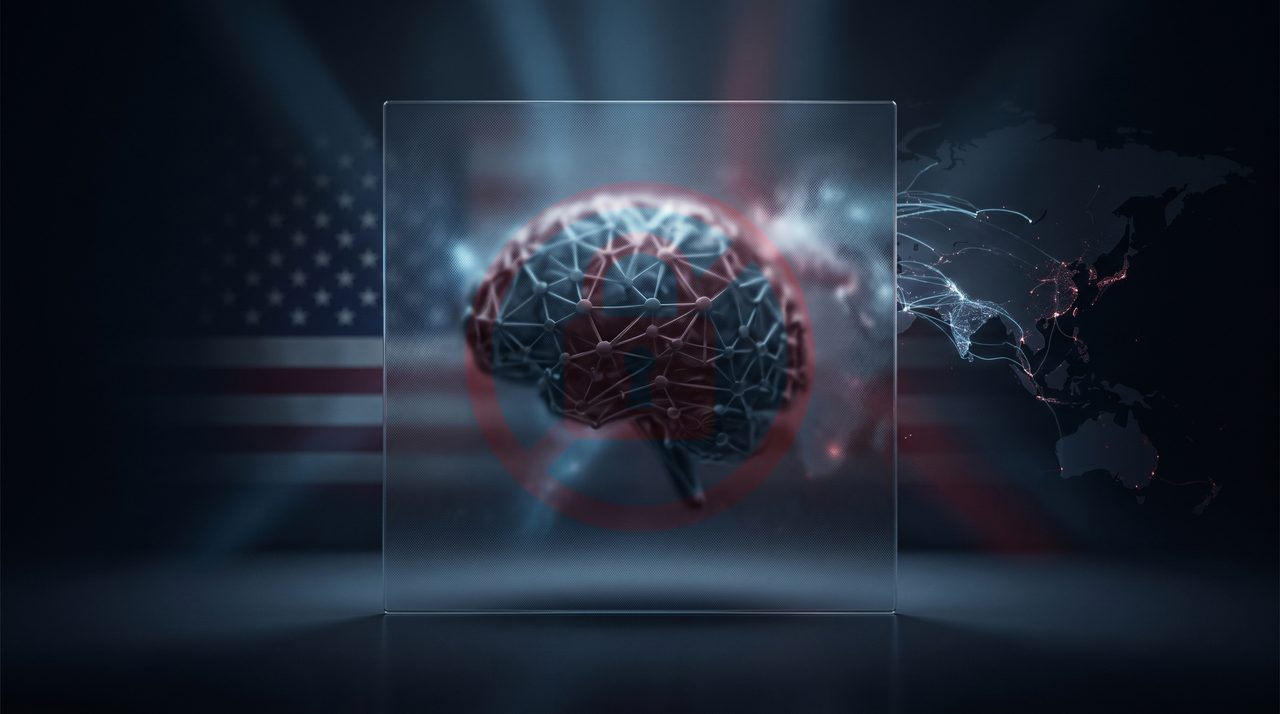
Yesterday, Friday 12 June 2026, the American administration ordered Anthropic to cut off access to its two most advanced AI models, Claude Fable 5 and Claude Mythos 5, for every foreign national. Unable to filter the nationality of hundreds of millions of users in real time, Anthropic suspended both models for everyone, including its own American customers. To my knowledge, this is the first time a state has applied export controls to an AI model in production.
I am stopping on this not for the geopolitics, but for a very down-to-earth reason: what has just happened to Anthropic's customers can happen to any company that builds its business on an AI hosted abroad. I spend my days hosting business applications in France, out of reach of the Cloud Act. This affair is the textbook case I have been describing to my clients for two years, except that it has now happened for real. Here is what the sources say, and above all the lesson every SME should draw from it.
What happened, in two minutes #
According to the outlets that reported the affair, the export control directive was signed by Commerce Secretary Howard Lutnick and addressed to Anthropic's CEO, Dario Amodei. It bans access to the two models for any non-American national, on American soil and abroad. In practice, this is what it means:
- The measure targets the two latest models, launched on 9 June: Claude Fable 5 (general release) and Claude Mythos 5 (distribution restricted to audit partners). Three days on sale, then the shutdown.
- Unable to identify each user's citizenship in real time, Anthropic cut off access for its entire worldwide base, American customers included.
- The rest of the range stays online: Claude Opus 4.8, Sonnet and Haiku are not covered by the directive.
- The trigger cited: researchers at Amazon (an Anthropic investor) are said to have bypassed Fable 5's guardrails with a series of prompts. Anthropic disputes how serious the bypass was, describing it as “narrow” and as concerning vulnerabilities that were already public.
The shockwave is global because Anthropic's user base is: the United States accounts for about a fifth of users, India is the second market, and the rest is spread across the planet. Hence the immediate reaction, notably in India, from tech leaders calling for sovereign alternatives to be built rather than depending on a vendor able to turn off the tap overnight.
The real issue is not Anthropic. It is dependency. #
Whether or not the directive is justified, whether Anthropic is right or wrong on the substance, the striking fact for a business owner lies elsewhere: an AI supplier can see its product cut off overnight on its government's orders, and there is nothing you, a customer on the other side of the world, can do about it. The Australian start-up Isaacus, which specialises in legal AI, put it bluntly in its public reaction.
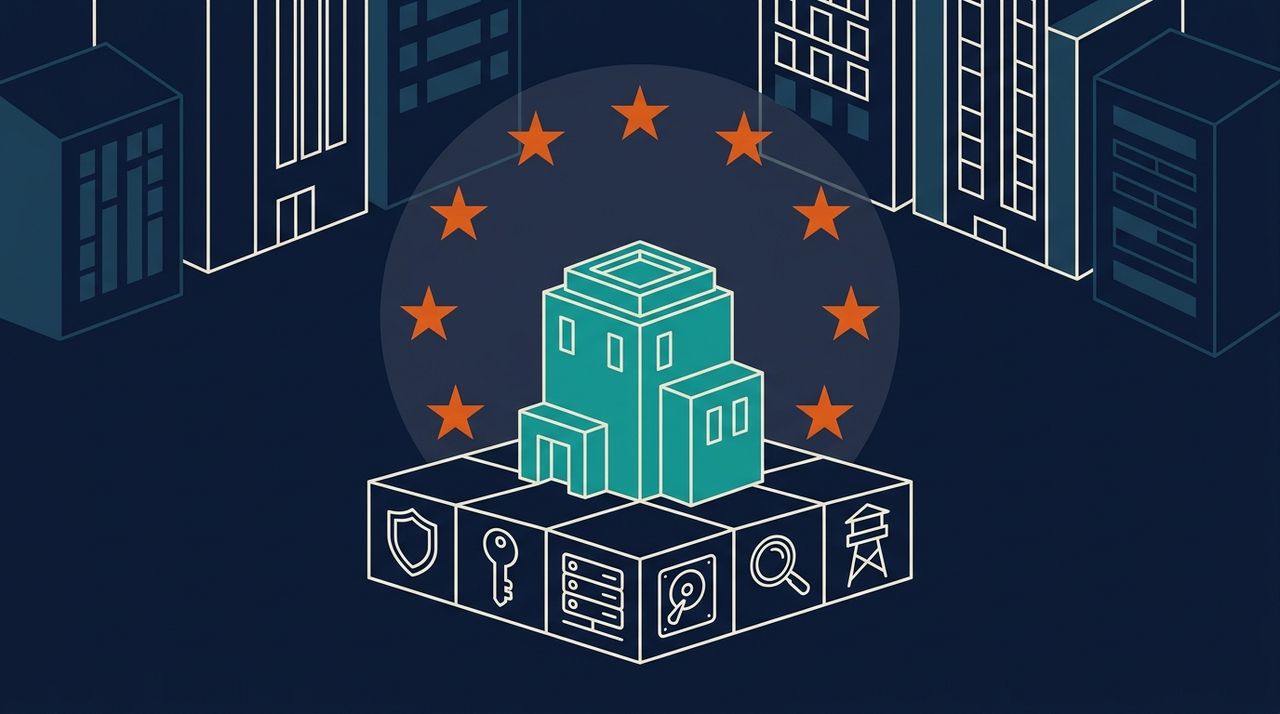
Its conclusion: no foreign government and no allied company can base its strategic services on an AI model hosted remotely by an American third party without exposing itself to an arbitrary cut-off. The only truly sovereign answer, in its view, is self-hosted models, isolated from the network if necessary. It is exactly the same reasoning I have applied to hosting for years, and which I set out in relation to the broader European movement in my article on the Tech Sovereignty Package: read the article

What it means in practice for an SME #
Ask yourself the question honestly: if your customer chatbot, your RAG over internal documents or your invoice extraction component runs through an American API, what happens if that API returns “unavailable” tomorrow morning? The practical consequences of such a cut-off:
- Continuity of service: a business workflow coupled to a specific model stops dead if that model is withdrawn. No notice, no recourse: it is exactly what Anthropic's customers have been living through since yesterday.
- Confidentiality: your prompts (and therefore your business data, your contracts, your client files) pass through and are retained by a company subject to American law. The 30-day retention announced for these models is not a detail.
- Lock-in: the more your product is coupled to a model's specific features, the more the cost of migration explodes on the day you have to switch in a hurry.
- Price: a supplier in a position of strength sets its prices. Dependency is also paid for on the invoice, as the Qwant-Microsoft stand-off over search APIs showed.
The way out: taking back control of the AI layer #
The lesson is the same as for hosting: sovereignty is not a setting, it is a low-level layer. You do not become sovereign by changing logos, you become sovereign by bringing the infrastructure back. I am not saying you should self-host everything starting tomorrow: I do pragmatic AI, not dogma. But for the AI layer, it breaks down into three concrete levels, to be weighed according to how sensitive each use is:
- Self-hosted open models (Mistral, Llama, Qwen) on your own infrastructure or a cluster in France, via Ollama or vLLM, for anything involving sensitive data. Air-gapped if the business requires it.
- The API of a European vendor (Mistral first and foremost) rather than an American supplier when self-hosting is not economically justified.
- Decoupled architecture: an abstraction layer that lets you change models without rewriting the application, so that you are never trapped with a single supplier, American or not.
In real life, 80% of the business use cases I come across (RAG over internal documents, extraction, classification, rewording) run very well on a medium-sized open model hosted in France. You then keep the American frontier models for what genuinely justifies them, knowing the risk, and not by default because nobody asked the question.

My view as a craftsman of sovereign hosting #
I keep telling my clients: AI is a tool, and I use it when it creates real value, not for show. And precisely because it is a production tool, it has to be reliable and under control. When I integrate AI into a business application, I favour what can run on infrastructure I control: a RAG on a sovereign Postgres, a local Mistral or Ollama, all on a Proxmox cluster in France (our sovereign hosting).
It is the same reflex as for the rest of the stack: I have already explained why I replace Google Analytics with self-hosted Matomo (read the article), and what the European Parliament's switch to Qwant is really worth (read the article). The constant: look at what lies beneath the top layer, and know who can be compelled by which law.
In summary #
The Fable 5 / Mythos 5 affair may be an isolated episode, or the first in a long series; nobody knows yet. Either way, it is a reminder of a simple rule: you do not build a critical activity on a building block that a third party can switch off remotely. If you want to know where your own AI stack is exposed, and what can be brought back onto French infrastructure, that is precisely the scoping I do with my clients in Strasbourg and remotely across France (our AI services). The first conversation is free.
Sources #
- Anthropic, “Statement on the US government directive to suspend access to Fable 5 and Mythos 5”: https://www.anthropic.com/news/fable-mythos-access
- Al Jazeera, “US orders Anthropic to disable AI models for all foreign nationals”: https://www.aljazeera.com/news/2026/6/13/us-orders-anthropic-to-disable-ai-models-for-all-foreign-nationals
- CNBC, “Anthropic disables access to Fable 5 and Mythos 5 to comply with government directive”: https://www.cnbc.com/2026/06/12/anthropic-disables-access-to-fable-5-and-mythos-5-to-comply-with-government-directive.html
- NBC News, “Anthropic suspends new AI models after government directive”: https://www.nbcnews.com/tech/tech-news/anthropic-suspends-new-ai-models-fable-mythos-government-directive-rcna349901
- Fortune, “Anthropic disables Fable and Mythos AI models following U.S. government export ban”: https://fortune.com/2026/06/13/anthropic-disables-fable-mythos-export-controls-national-security-threat/
- Washington Examiner, “Amazon researchers use Anthropic AI to find cybersecurity weaknesses”: https://www.washingtonexaminer.com/policy/technology/4607706/amazon-researcher-anthropic-ai-security-weaknesses/
- Quartz, “Anthropic is pulling its two newest AI models after a U.S. government directive”: https://qz.com/anthropic-fable-5-mythos-5-export-control-directive-061226
- Reddit r/news (Axios repost), “US blocks foreign access to Anthropic's most advanced AI models”: https://www.reddit.com/r/news/comments/1u4damv/us_blocks_foreign_access_to_anthropics_most/
- The Hacker News, “U.S. Orders Anthropic to Suspend Fable 5 and Mythos 5 Access for Foreign Nationals”: https://thehackernews.com/2026/06/us-orders-anthropic-to-suspend-fable-5.html
- Engadget, “Anthropic Blocks All Customers' Access To Fable 5 And Mythos 5”: https://www.engadget.com/2193656/anthropic-blocks-access-fable-5-mythos-5/
- Times of India, “US ban on Anthropic's Fable 5 and Mythos 5 has 'Amazon link'”: https://timesofindia.indiatimes.com/technology/tech-news/us-ban-on-anthropics-fable-5-and-mythos-5-has-amazon-link-researchers-from-amazon-used-a-series-of-prompts-to-/articleshow/131701361.cms
- Livemint, “After Anthropic blocks access to Mythos, Fable 5, Zoho's Sridhar Vembu says Bharat must find its own way”: https://www.livemint.com/news/india/after-anthropic-blocks-access-to-mythos-fable-5-zohos-sridhar-vembu-says-bharat-must-find-its-own-way-ahead-11781338049892.html
- Isaacus, “Our response to the US ban on Fable 5 and Mythos 5”: https://isaacus.com/blog/our-response-to-the-us-ban-on-fable-5-and-mythos-5
- Claude API Docs, “Introducing Claude Fable 5 and Claude Mythos 5”: https://platform.claude.com/docs/en/about-claude/models/introducing-claude-fable-5-and-claude-mythos-5